Search Amazon for a creator’s handle or #FoundItOnAmazon, check social bios for amazon.com/shop URLs, browse Amazon Live and idea lists, or run a Creator Connections campaign so creators apply to you.
Why Amazon Influencer Storefronts Are Hard to Find (and What Still Works in 2026)
Amazon never shipped a public, browsable directory of its influencers. Storefronts exist, they rank in Google, and they convert — but the retailer treats them as creator-owned destinations rather than a catalog you can filter by niche or follower count.
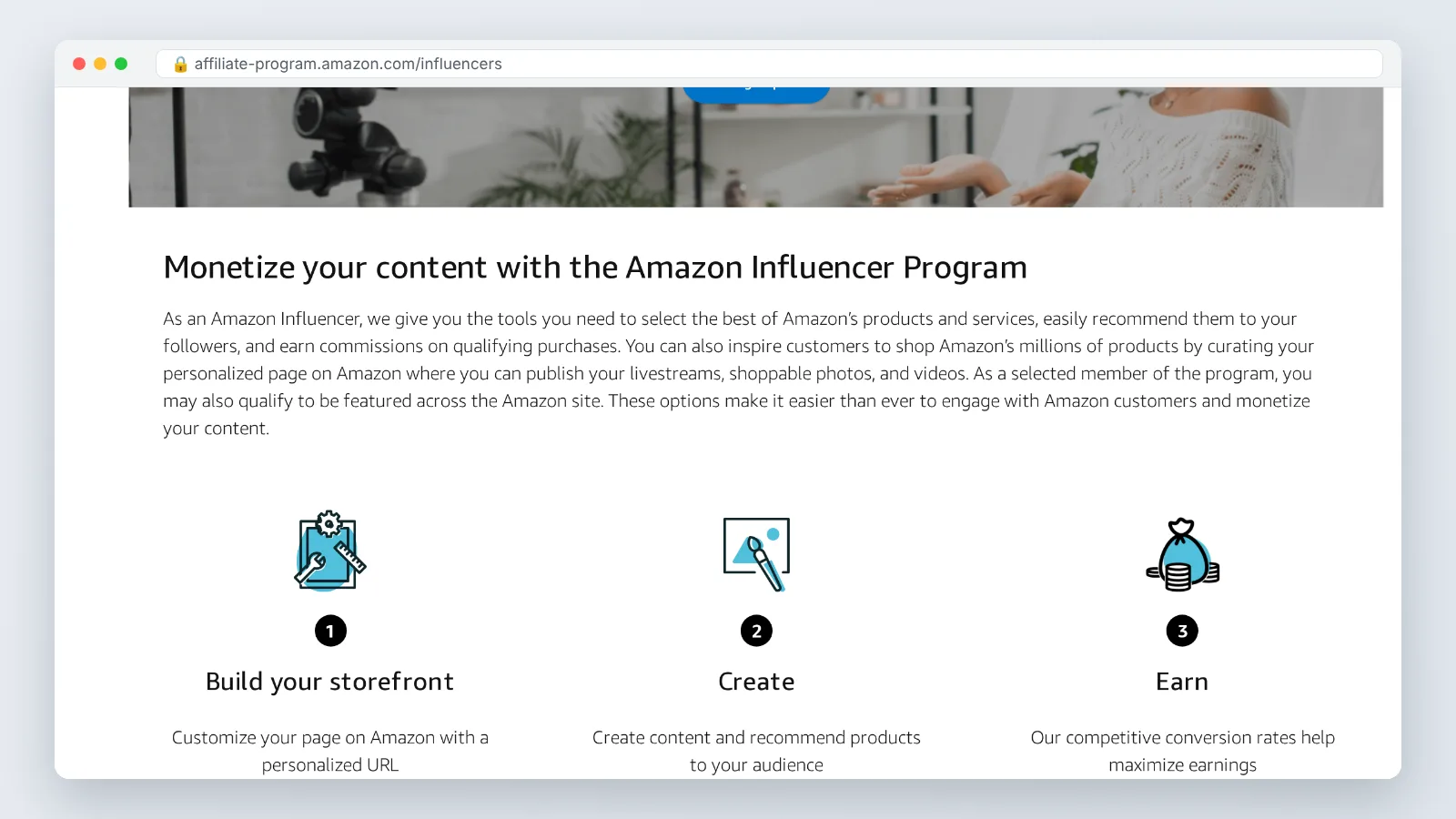
The program is not small or new. Amazon launched the Influencer Program in 2017 and describes it as one of the largest creator-focused affiliate programs in the world, according to About Amazon. Amazon also says the Amazon Influencer Program is currently available in more than 20 countries, including the U.S., UK, France, Germany, Italy, Spain, Canada, India, Brazil, Poland and Sweden.
Scale without search is the problem. You are looking for a very large, unindexed set of creator-owned pages.
One popular shortcut also died. Amazon’s in-app Inspire feed, long recommended as a way to discover creator content, was shut down as of February 18, 2025, according to gHacks Tech News, so any guide that still tells you to scroll Inspire is describing a surface that no longer exists.
What still works falls into four buckets:
| Method | Best for | Effort |
|---|---|---|
| On-site search (handle, hashtag, video) | Shoppers chasing one creator | Minutes |
| Social bio link mining | Brands building a prospect list | Hours |
| Amazon Live and idea lists | Finding actively publishing creators | Ongoing |
| Creator Connections campaign | Brands with product and budget | Weeks |
Step 1 — Search Amazon Itself: Handles, #FoundItOnAmazon, and Shoppable Video
Time: 5–10 minutes per creator. You need: the creator’s exact social handle.
Start inside Amazon’s own search bar, not Google. Type the creator’s handle or display name and watch for a storefront card or a cluster of their review videos in product carousels.
The URL pattern is your best friend here. Approved influencers get a vanity storefront that uses the URL format amazon.com/shop/username, as TechCrunch reported when Amazon expanded the program to Twitter and Instagram, which is why typing a known handle after amazon.com/shop often lands you directly on the right page.
Hashtag search is the second move. Searching the hashtag #founditonamazon in Amazon’s own search bar surfaces aggregated creator photos and collections that link back to influencer storefronts, according to Influencer Hero’s guide to finding Amazon influencers.
Shoppable video is the third. Scroll any product detail page to the customer-video section and tap through a review clip — as general guidance, the creator name shown above the clip is often a link to their profile or storefront, so tap it and see where it goes.
Three searches, three entry points. Run all three before you decide a creator has no storefront, because many creators are approved under a handle that differs from their YouTube display name.
Step 2 — Work Backward From Social Profiles to amazon.com/shop URLs
Time: 1–2 hours to build a list of 25–50 prospects. You need: a spreadsheet and a link-in-bio habit.
Most Amazon influencers advertise their storefront everywhere except Amazon. Check the Instagram bio, the YouTube channel description, the TikTok link page, the pinned comment under a haul video, and the "links" block on a newsletter.
Google does the heavy lifting if you query it properly. Search for the site path plus a niche term — for example, the shop path combined with "skincare" or "home gym" — and you will pull storefronts that have been indexed because a creator linked to them publicly.
Why brands bother: Amazon, citing PYMNTS Intelligence, states that more than half of U.S. consumers make at least one purchase a year based on a creator’s recommendation. That is the reason a storefront list is worth the spreadsheet time.
Record four columns per creator: handle, storefront URL, primary category, and date of their most recent post. The last column is what keeps a dead prospect out of your outreach queue.
Sort by category before you sort by audience size. A mid-size creator who only reviews kitchen gear will out-convert a generalist with ten times the followers.
Step 3 — Browse Amazon’s Live and Idea List Surfaces for Active Creators
Time: 20–30 minutes of browsing per session. You need: an Amazon account and a category in mind.
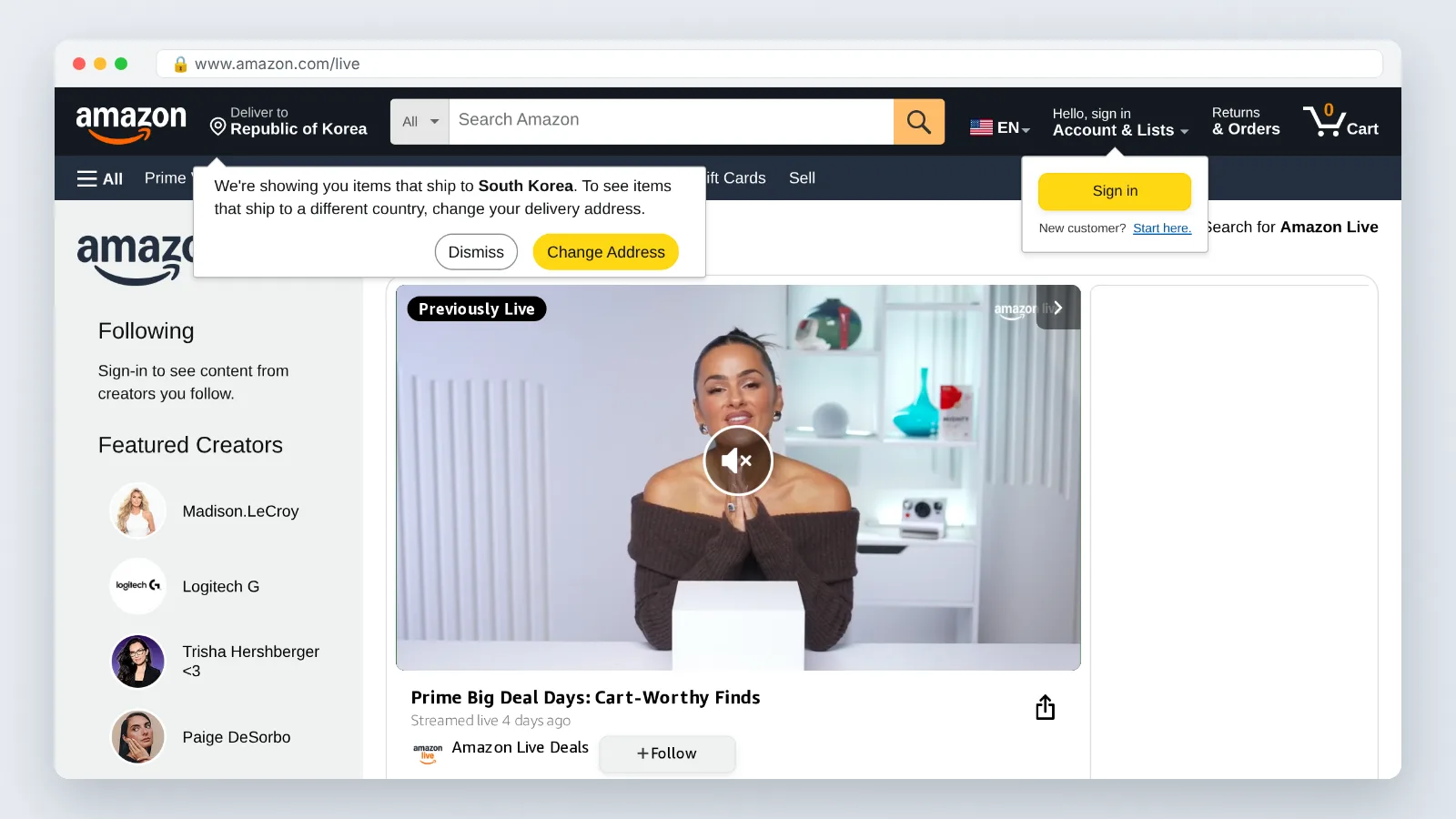
Amazon Live is the closest thing the site has to a creator feed. Streams are organized by category and time slot, and hosting is tied to Amazon’s creator programs — check Amazon’s help documentation for current eligibility rules — so as a general rule a host you are watching is a creator who is publishing right now, which helps answer the "is this storefront abandoned?" question before you even click.
Idea lists are the quieter surface. Creators group products into themed collections — dorm setup, toddler travel, first apartment — and those lists appear in search results and on related-product modules, each one carrying a link back to the storefront that owns it.
Attribution runs on a tight clock. Creator-driven sales on Amazon are tracked for purchases made within 24 hours of a shopper clicking the creator’s link or shoppable video, according to BellaVix, which is why active creators post constantly rather than relying on old uploads.
Bookmark three to five hosts per category and revisit weekly. Patterns show up fast: who streams on schedule, who answers questions live, who only shows up during Prime events.
For shoppers, this is also the honest way to judge a recommendation. Watching someone handle a product live tells you more than a storefront thumbnail ever will.
Step 4 — Let Creators Come to You With a Creator Connections Campaign
Time: 2–4 weeks from setup to first published content. You need: a Seller Central account, enrolled ASINs and budget.
Flip the direction of the search if you are a brand. Creator Connections lists your products inside Amazon’s creator-facing marketplace, and approved influencers opt in themselves — no cold DMs, no scraped bios.
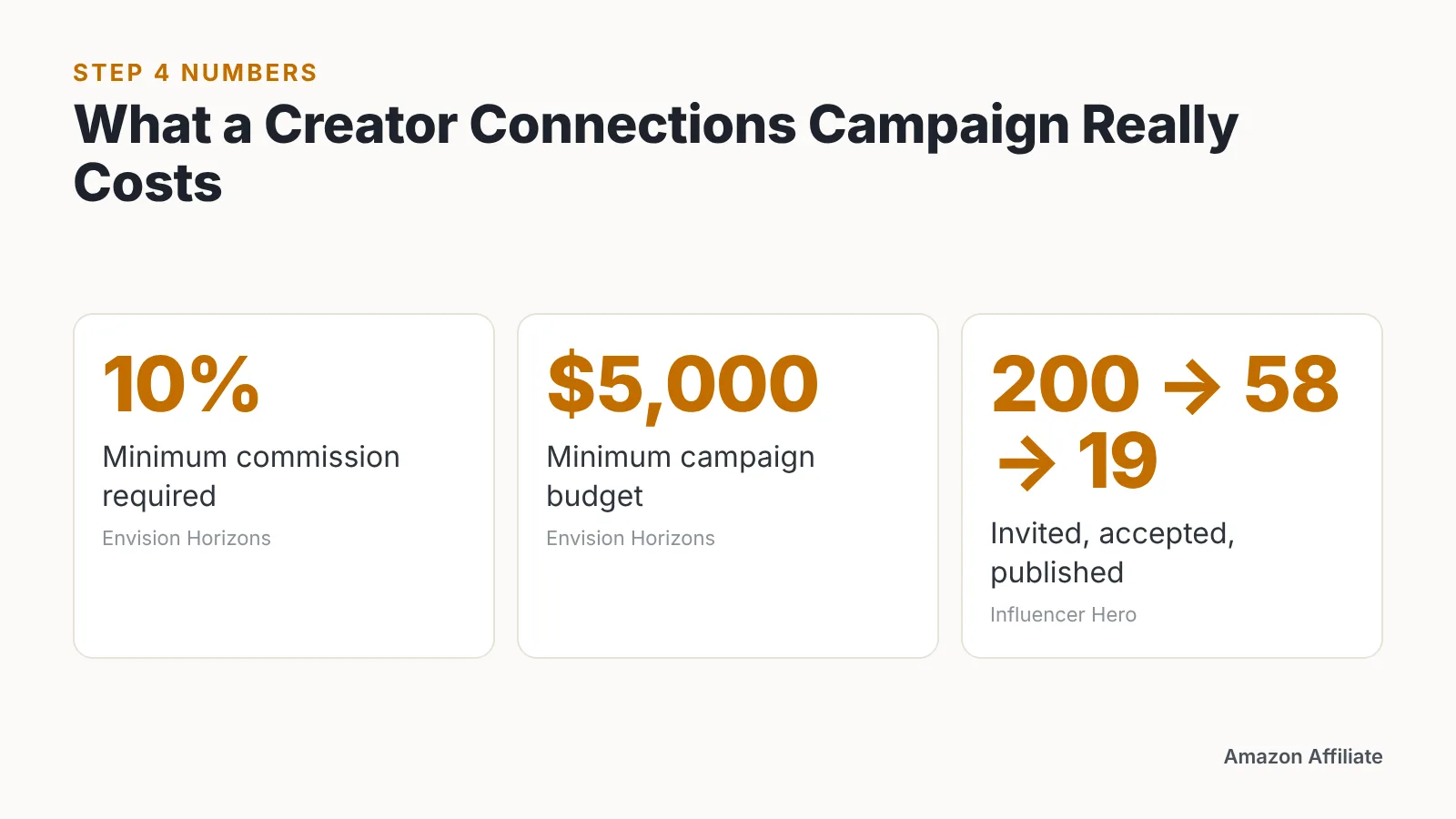
The entry bar is real money. Brands that use Amazon Creator Connections to recruit Amazon creators must set a minimum commission of 10% and a campaign budget of at least $5,000, with campaigns running three months to one year, according to Envision Horizons.
Set expectations on response rates. In one documented Creator Connections campaign, 200 invited creators produced 58 acceptances and only 19 pieces of published content at a 15% commission rate, according to Influencer Hero.
That drop-off is normal, not a failure. Plan your invite volume around published content, not acceptances, and — editorial advice rather than an Amazon requirement — keep your product brief short enough that a creator can scan it in one screen.
Use the campaign as a sourcing tool too. Every creator who accepts hands you a storefront URL and a content sample you can evaluate for future direct partnerships.
Step 5 — Vet a Storefront Before You Buy From It or Pitch It
Time: 10 minutes per storefront. You need: the storefront URL and a second browser tab.
A storefront that loads is not a storefront that works. Run the same five checks every time:
- Recency — is the newest idea list or video from this quarter, or from two years ago?
- Category coherence — does one niche dominate, or is it a random grab bag?
- Video presence — are there original review clips, or only product photos pulled from listings?
- Link health — do the featured products still exist and ship, or are half of them unavailable?
- Disclosure — does the creator label affiliate relationships clearly on their social posts?
Category economics should shape your expectations. Amazon’s published fixed standard commission income rates — the U.S. Amazon Associates fee schedule — are category-based, paying 10.00% on Luxury Beauty, 5.00% on digital and physical music, and 4.50% on physical books, kitchen and automotive. Those percentages are the U.S. numbers; rate cards are set per locale, so creators in the other countries where the program runs work from a different schedule.
A creator reviewing kitchen gear is working on thinner margins than one reviewing luxury beauty, which affects how they price partnerships and how hard they push volume.
For shoppers, vetting is simpler: buy from storefronts where the creator clearly owns the product on camera. As general guidance, a creator link sends you to the same product listing any shopper sees — confirm the price on the product page itself.

Your Find-an-Amazon-Influencer Checklist
Work down this list in order. Each line takes minutes, and skipping the early ones costs you hours later.
- ☐ Search the creator’s exact handle in Amazon’s search bar
- ☐ Try amazon.com/shop plus the handle directly in the address bar
- ☐ Search #founditonamazon on Amazon for niche collections
- ☐ Open three product pages in your category and check the customer-video section
- ☐ Scan Instagram, YouTube, and TikTok bios for a shop link
- ☐ Run a site-path Google query with a category keyword
- ☐ Browse Amazon Live by category and note hosts who stream on schedule
- ☐ Log handle, URL, category, and last post date in a spreadsheet
- ☐ Confirm the newest storefront item is from this quarter
- ☐ Check that featured products are in stock and shipping
- ☐ Confirm affiliate disclosure on the creator’s social posts
- ☐ Decide: shop it, pitch it directly, or route it through a Creator Connections campaign
Five steps, one checklist. If a storefront fails the recency and link-health lines, drop it and move on rather than trying to rescue the contact.
Common Mistakes When Hunting for Amazon Influencer Storefronts
The failure that wastes the most time is treating follower count as proof of an active storefront. A creator with a large following may have been approved in 2019, posted twelve idea lists, and never returned — the page still loads, still ranks, and still looks legitimate.
Avoid it with one rule: check the date of the most recent item before you check the audience size. If nothing is newer than last year, the storefront is a fossil.
Other mistakes show up repeatedly:
- Following old guides that send you to Amazon’s Inspire feed, which no longer exists
- Assuming the Amazon handle matches the YouTube display name — it frequently does not
- Pitching creators whose category sits outside your product, then blaming low acceptance rates
- Treating storefront traffic as free; creators still need a reason to feature you
- Ignoring non-U.S. creators even though the program runs in more than 20 countries
One more: do not scrape and blast. A short, specific note referencing a creator’s actual video beats a hundred templated emails, and it costs you the same ten minutes you already spent vetting the storefront.
Frequently asked questions
Is there an official directory of Amazon influencers?
No. Amazon does not publish a browsable directory of influencer storefronts, so discovery depends on searching handles, the #founditonamazon hashtag, customer videos on product pages, social bio links, and Amazon Live category listings.
What is the URL format for an Amazon influencer storefront?
Approved influencers get a vanity storefront using the URL format amazon.com/shop/username, as TechCrunch reported, so typing a creator’s known social handle after that path often loads their storefront immediately without any search at all.
Can brands recruit Amazon creators without doing manual outreach?
Yes, through Creator Connections. Envision Horizons reports that brands using it must set a minimum commission of 10% and a campaign budget of at least $5,000, with campaigns running three months to one year.
How many invited creators actually publish content?
In one documented campaign, fewer than you would expect. Influencer Hero reported a Creator Connections campaign in which 200 invited creators produced 58 acceptances and only 19 pieces of published content at a 15% commission rate. That is a single campaign rather than an Amazon-wide benchmark, but it is a reason to plan invite volume around published output.
Does shopping through an influencer storefront cost more?
It generally should not: creator links point to standard Amazon listings and the creator earns a commission from Amazon rather than a markup, though you should confirm the price on the product page. Amazon tracks creator-driven sales for purchases made within 24 hours of a click, according to BellaVix.
Sources
- What is the Amazon Influencer Program? Your questions answered. — About Amazon
- Amazon expands its Influencer Program to include Twitter and Instagram, in addition to YouTube — TechCrunch
- Amazon Discontinues TikTok-Style Inspire Shopping Feed — gHacks Tech News
- How to Find Influencers on Amazon and their Storefronts: The Ultimate Guide — Influencer Hero
- Amazon’s Creator Connections: Hit or Miss? — Envision Horizons
- Amazon Creator Connections: A Complete Guide for Brands — Influencer Hero
- Standard Commission Income Rates — Amazon Associates
- How to Launch a High-Converting Amazon Creator Connections Campaign — BellaVix
Written with AI assistance and fact-checked against the sources cited above before the Amazon Affiliate Editorial Team published it.