Pick a niche you can post in weekly, open a free account on YouTube, TikTok or a hosted blog, publish ten useful reviews, apply to an affiliate program with that live URL, then add links and disclosures.

What "No Money" Affiliate Marketing Really Means (Time Is Your Budget)
Nobody charges admission to an affiliate program. The spending shows up as evenings, weekends, and the patience to publish for months before a stranger reads you. That trade is real, and it is the only trade available when your starting balance is zero.
A zero-budget stack looks like this:
| Need | Free option | What you trade |
|---|---|---|
| Publishing home | YouTube, TikTok, Pinterest, or a hosted blog on a free subdomain | No custom domain, platform owns the audience |
| Camera and audio | Phone, window light, quiet room | More retakes, slower edits |
| Research | Retail listings, Q&A threads, product manuals you already own | Hours of reading |
| Free tier of any sender | Low send limits until you grow |
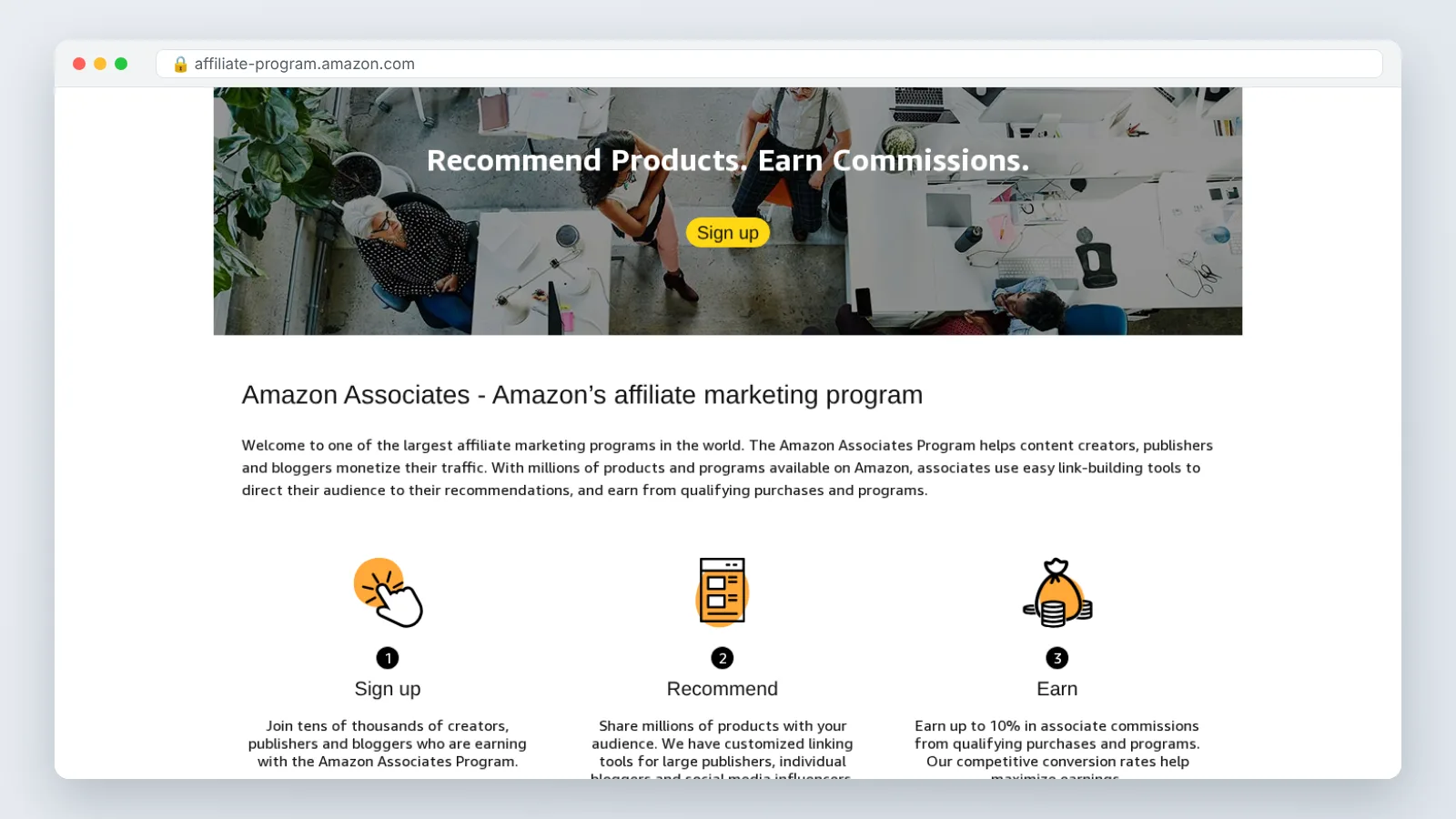
Amazon’s Associates homepage states creators can earn up to 10% in associate commissions from qualifying purchases and programs, so a single sale rarely pays more than a few dollars. That shapes everything. You are not chasing one big check; you are building a stack of small, repeatable ones.
Cash arrives slowly, too. Amazon pays Associates commission income approximately 60 days after the end of the month in which it was earned, according to the Amazon Associates program site. Treat the first quarter as unpaid apprenticeship and the lag stops hurting.
Step 1 — Choose a Niche You Can Publish In Every Week for Free
Time: two to three hours. What you need: a free spreadsheet and honesty about what you already own.
Your niche has to survive a boring Tuesday. Pick something you can post about fifty times without buying anything new, because buying is off the table. Gear you already use, hobbies you already fund, problems you already solve for friends — that is the shortlist.
Score each candidate against four criteria:
- Access: do you own enough products to show, not just describe?
- Question volume: are people publicly asking beginner questions about it?
- Payout: does the category pay a workable rate, or a token one?
- Stamina: can you film or write about it weekly for a year?
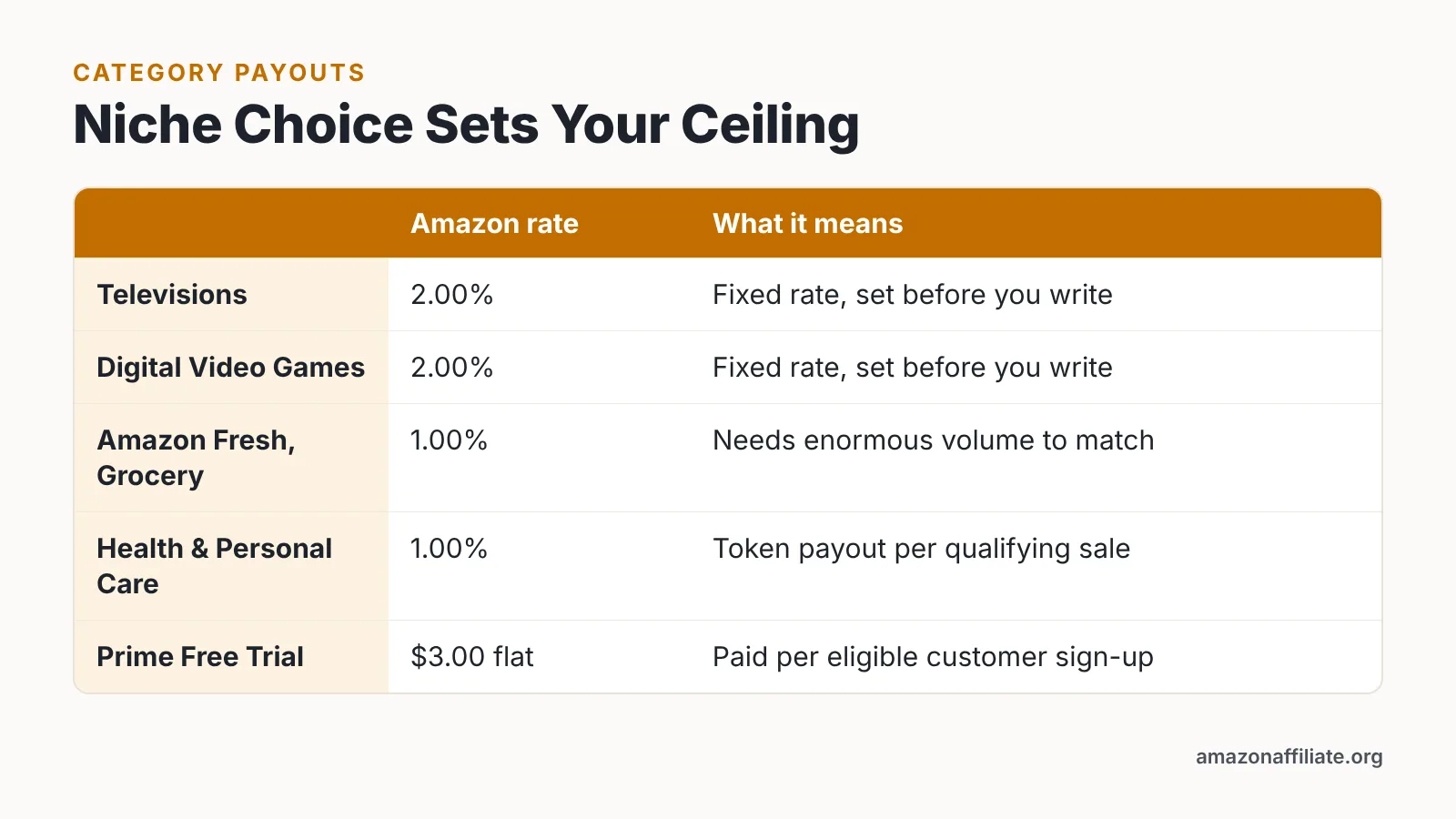
Amazon’s published commission table sets fixed rates of 2.00% for Televisions and Digital Video Games and 1.00% for Amazon Fresh, Grocery and Health & Personal Care, so the category decides your ceiling before you write a word. A grocery channel needs enormous volume to match a small audience in a better-paying category.
Narrow beats broad. "Budget home coffee gear for small kitchens" gives you angles, comparisons, and a recognizable voice. "Kitchen products" gives you a graveyard of unread posts.
Step 2 — Build a Free Publishing Home and Get Approved for an Affiliate Program
Time: one weekend. What you need: an email address, a profile photo, and three posts ready to go live.
You need something live before you apply. Amazon’s developer onboarding documentation confirms that providing the URL of your site is a registration requirement for becoming an Associate, so a half-finished draft folder will not get you through the form.
The platform does not have to be a self-hosted website. The Amazon Associates Operating Agreement explicitly permits monetizing social media user-generated content, an app or an Alexa skill, which is why a free YouTube channel or TikTok profile can serve as your starting "Site." Choose one primary platform and one secondary, not five.
Before you submit the application, make the profile look like a real publication:
- A clear channel or blog name tied to your niche
- A short bio that says who you help and with what
- Three published pieces, each solving one specific problem
- A visible contact method
Applications are reviewed by humans and automated checks, and empty profiles get rejected. Publish first, apply second. If you are declined, add content and reapply rather than starting a new account.
Step 3 — Publish Your First 10 Genuinely Useful Posts or Videos Using Free Tools
Time: four to six weeks at two or three pieces a week. What you need: phone, window light, free editing software, products you already own.
Ten pieces is the smallest sample that tells you anything. Below that, you cannot see which format, length, or topic actually holds attention. Set a cadence and keep it boring.
Mix the formats so the catalog answers different searches:
- Three "best for a specific person" roundups
- Three single-product reviews of items you own
- Two comparisons between two options readers confuse
- One setup or troubleshooting walkthrough
- One honest "skip this, buy that instead" piece
Shoot in daylight against a plain wall, keep the first script under 150 words so you do not ramble, and cut anything that is not a demonstration or a decision. Free editors handle trims, captions, and audio leveling fine.
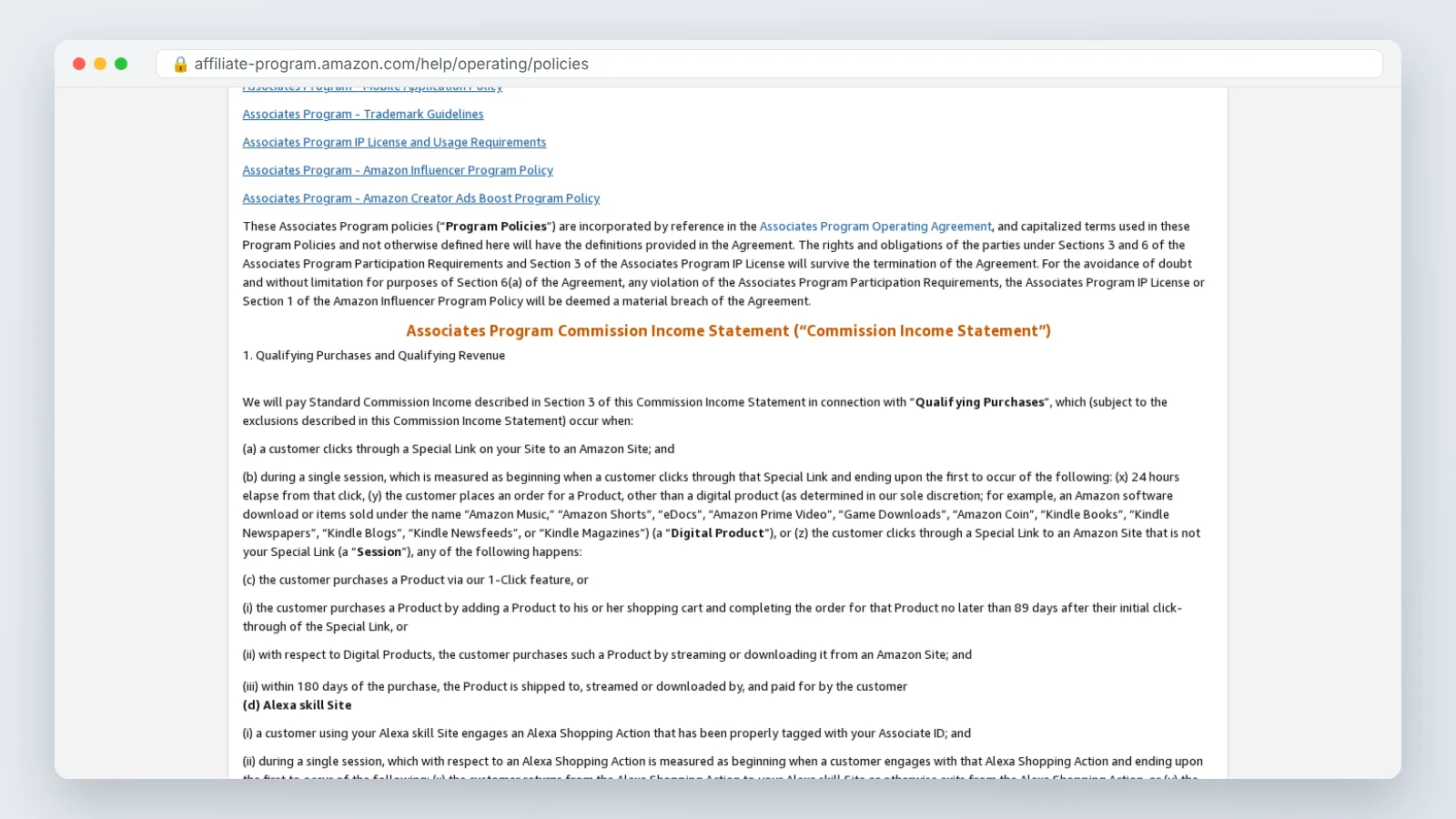
Accuracy protects you. Amazon calculates Associates commission income on the sale price rather than the list price of each qualifying item, according to Amazon Associates Central, so a heavily discounted product pays less than its sticker price suggests. Quote prices loosely, date your claims, and update when a product changes.
Step 4 — Add Affiliate Links, Disclosures, and Tracking the Compliant Way
Time: 30 minutes per piece. What you need: your approved affiliate account and a separate tracking ID per platform.
Links go where the decision happens, not where the page ends. One link near the recommendation, one in a comparison line, one at the close. Stuffing twenty links into a thin post reads as spam to readers and to review teams.
Disclosure comes before the first link, in plain language, visible without clicking "more." In the United States, the Federal Trade Commission’s endorsement guides apply to anyone who recommends products for compensation, including creators who were never paid in cash but earn commissions; outside the US, national advertising regulators set their own wording and placement expectations. Write it once, reuse it everywhere.
Placement value varies more than beginners expect. Amazon’s onsite commission schedule pays only 0.50% on direct qualifying purchases in categories such as physical books, grocery, toys and Amazon devices, according to Amazon Associates Central.
Set up tracking before the traffic arrives:
- One tracking ID per platform, so you know whether video or blog converts
- A simple monthly log of clicks, orders, and earnings per piece
- A note of which product you recommended, so you can spot dead links
This is general information, not legal advice; check the rules for your own jurisdiction.
Step 5 — Earn Free Traffic and Reinvest Your First Commissions
Time: ongoing, roughly a third of your weekly hours. What you need: the ten pieces you already published.
Free traffic comes from being the most specific answer to a narrow question. Target the long, awkward phrasings real buyers type — model numbers, room sizes, budget limits, compatibility worries. Then answer them in the first thirty seconds or the first paragraph.
Distribution without a budget:
- Answer questions in forums and subreddits where your niche lives, linking only when the rules allow
- Cut each long piece into two or three short vertical videos
- Collect emails on a free tier and send one useful note a week
- Update older pieces when a product is discontinued
Service sign-ups can pay faster than hardware. Amazon’s bounty table pays a flat $3.00 when an eligible customer signs up for a Prime Free Trial through an Associate’s link. Shopify’s 2025 guide reports Amazon affiliate commissions range from 1% to 10% by category, with bounty payouts of $3 to $25 for service sign-ups such as Prime or Audible.
Reinvest in this order: a domain name, then email hosting, then a decent microphone, then anything else. Paid ads come last, if ever.
Your Zero-Budget Launch Checklist
Work down this list in order. Each item costs time only.
- ☐ Shortlisted three niches and scored them on access, questions, payout, and stamina
- ☐ Picked one primary platform and one secondary
- ☐ Created the free account, profile photo, bio, and contact method
- ☐ Published three pieces before applying anywhere
- ☐ Applied to an affiliate program with your live URL
- ☐ Reached ten published pieces across reviews, comparisons, and roundups
- ☐ Added a visible disclosure above the first link on every piece
- ☐ Created a separate tracking ID for each platform
- ☐ Started a monthly log of clicks, orders, and earnings
- ☐ Scheduled a weekly publishing slot in your calendar and defended it
- ☐ Planned the first reinvestment: domain, then email, then audio
Print it, pin it, tick it. The checklist is eleven items, and nine of them are done before a single commission lands. That ratio is the job.
Common Mistakes Beginners Make When Starting With No Money
The most common failure is the copied roundup. A beginner writes "10 Best Headphones" from spec sheets, never touching a product, stacks affiliate links through it, and waits. Nothing ranks, nobody clicks, and the affiliate account eventually closes for lack of qualifying sales.
Avoid it by writing only about what you can demonstrate, even if that means a catalog of five honest pieces instead of twenty hollow ones.
Other patterns worth dodging:
- Chasing high-ticket categories you cannot access. Reviewing televisions you have never owned reads exactly as hollow as it is.
- Building on one rate. Amazon reserves the right to change Associates program terms with an effective date no less than two business days after notice, according to the Associates Program Operating Agreement.
- Quitting at week six. The payment lag means early effort always looks unrewarded.
- Spending money you have not earned. A premium theme does not fix a thin catalog.
- Hiding the disclosure. It costs nothing and protects everything.
The beginners who make it past month three share one habit: they publish on schedule whether or not last week’s piece worked.
Frequently asked questions
Can I really start affiliate marketing with zero dollars?
Yes. Affiliate programs are free to join, and a free YouTube, TikTok, or hosted blog account satisfies the site requirement — Amazon’s developer onboarding documentation confirms that providing the URL of your site is a registration requirement for becoming an Associate.
How long before I see my first payment?
Longer than most beginners expect. Amazon pays Associates commission income approximately 60 days after the end of the month in which it was earned, according to the Amazon Associates program site, so a sale made in March typically pays out around the end of May.
Do I need a website, or is social media enough?
Social media can be enough to start. The Amazon Associates Operating Agreement explicitly permits monetizing social media user-generated content, an app or an Alexa skill, so a free profile counts as a valid "Site" while you save for a domain.
Which niche pays best for a beginner with no budget?
Pick one you can access for free, then check the payout. Amazon’s published commission table sets fixed rates of 2.00% for Televisions and Digital Video Games and 1.00% for Amazon Fresh, Grocery and Health & Personal Care, so grocery content needs far more volume to earn the same money.
Are service sign-ups worth promoting alongside products?
Often, yes, because they pay flat amounts rather than a percentage. Amazon’s bounty table pays a flat $3.00 when an eligible customer signs up for a Prime Free Trial through an Associate’s link, which can beat a small-ticket product sale.
Sources
- Amazon Associates – Amazon’s affiliate marketing program
- Standard Commission Income Rates — Amazon Associates Central
- Associates Program Operating Agreement — Amazon Associates Central
- Sign up as an Amazon Associate — Creators API documentation
- Amazon.com Associates Central — Help
- Amazon Affiliate Program: Complete Earning Guide — Shopify
- Onsite Commission Income / Direct Qualifying Purchases — Amazon Associates Central
Written with AI assistance and fact-checked against the sources cited above before the Amazon Affiliate Editorial Team published it.