An affiliate marketing side hustle costs little cash and a lot of patience: a domain, hosting, a site with real posts, a few hours most weeks, and sales arriving fast enough to keep your Amazon account alive.

Fact level first: what Amazon confirms, what’s reported, and what nobody discloses
Three kinds of claims circulate about part-time affiliate income, and mixing them is how people end up disappointed six months in. Amazon publishes its rules in writing. Almost everything about typical earnings comes from somewhere else, or from nowhere at all.
| Claim | Fact level | Who says it |
|---|---|---|
| Commission rates, category splits and per-product caps | Confirmed by Amazon | Amazon Associates Central |
| Approval conditions: qualifying sales window, content bar | Confirmed by Amazon | Amazon Associates Central |
| How many Americans hold more than one job | Official government count | U.S. Bureau of Labor Statistics |
| Side hustle participation and how the money is spent | Reported survey data | Bankrate |
| Average monthly side hustle earnings | Reported, secondhand summary | Omni Calculator summarising Bankrate |
| What a typical Amazon Associate earns, or how long approval takes | Not disclosed | Nobody |
Some of Amazon’s limits are unusually specific. Amazon Associates Central states that commission on fine art is capped at $200 per product, so even a gallery-priced referral has a ceiling. The same help documentation says an application can be withdrawn if it has not produced enough qualifying sales in the 180 days after submission, and that a rejected Associates ID cannot be reinstated.
What Amazon never publishes is the number you most want: what an average Associate makes, how much traffic the first sale usually needs, how many applications pass review. No survey fills that hole either. Treat any site quoting an "average Amazon affiliate income" as marketing until it names a primary source you can open.
Background: who runs a side hustle, how long it lasts, and what it pays
Second jobs are measured carefully; affiliate income is not. U.S. Bureau of Labor Statistics data for October 2026 counted 9,009 thousand multiple jobholders — 4,215 thousand men and 4,794 thousand women (checked November 2026). That is the pool your evenings and weekends are joining.
Participation is shrinking rather than climbing. Bankrate recorded its lowest share of Americans with a side hustle since 2017 at 19%, down from 36% in 2024 and 39% in 2023. Fewer people are trying, which tells you something about how most side work pays against the hours it eats.
Earnings figures are secondhand, so label them that way. Omni Calculator’s side hustle statistics report summarised Bankrate’s 2025 figure for average side hustle earnings as $885 per month — a blended number across driving, reselling, freelancing and everything else, not a figure for affiliate sites.
Duration is the gap nobody has filled. There is no public dataset tracking how long a part-time affiliate site survives before the owner stops publishing. The only documented clock is Amazon’s own, and it starts the day you apply.
The problem: a 180-day clock, a 10-post content bar, and 1% to 10% commissions
Three published rules decide whether your side hustle becomes income or an expired account. None of them are secret, and all of them are strict.
Amazon only reviews a new Associates application after the applicant has driven at least three qualified sales within the first 180 days, and personal orders do not count, according to Amazon Associates Central. That rule reshapes your first season entirely: you are not building an audience, you are hunting three strangers who buy. If you have been wondering why your own purchases never count toward that total, the review policy is where that answer lives.
The content bar comes before the clock. Amazon Associates Central describes the requirement as a site with robust original content, with a rule of thumb of at least 10 posts — written, published, and genuinely yours before you apply.
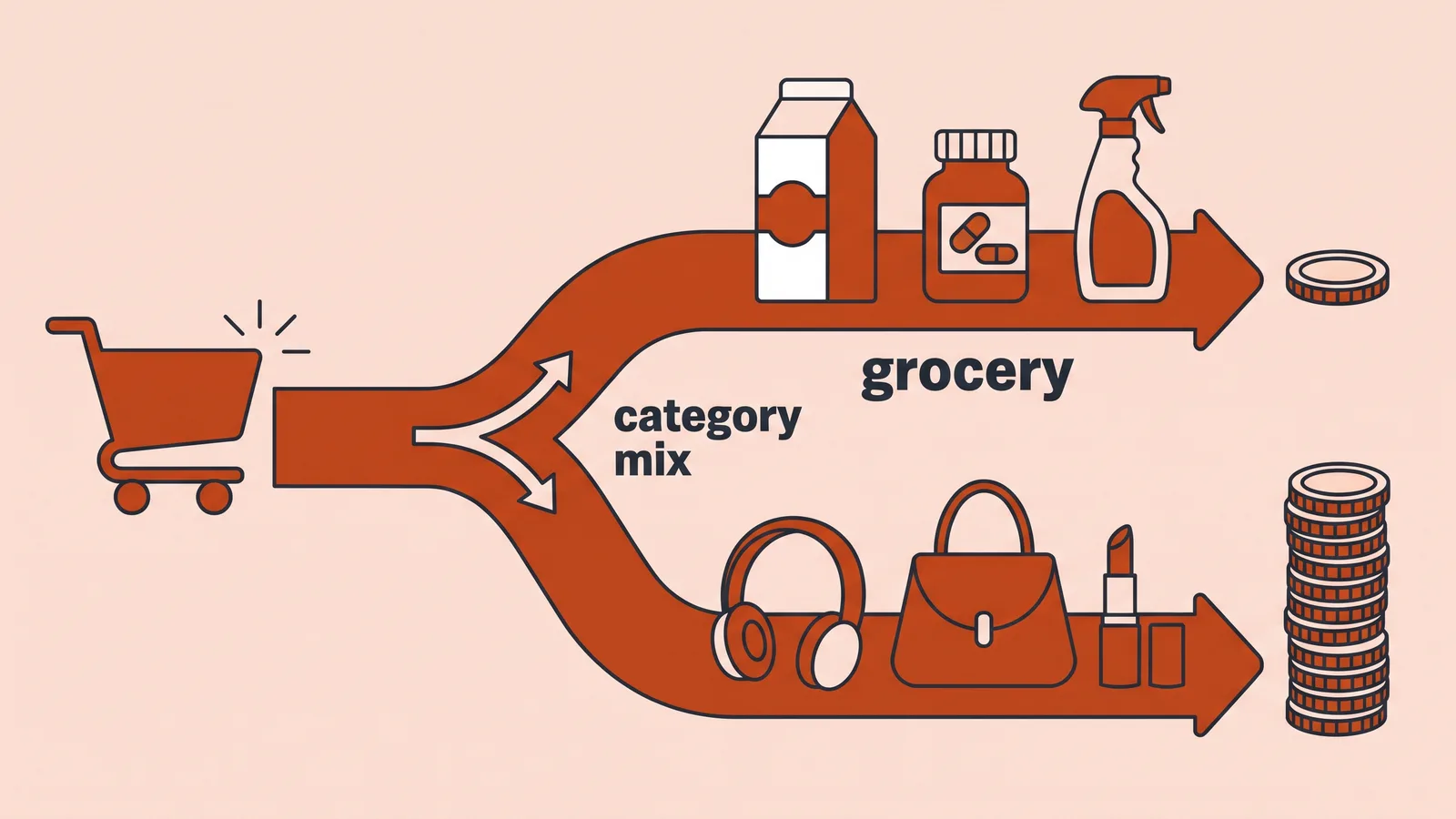
Then the rates. Amazon’s fixed standard commission schedule tops out at 10.00%, paid on Luxury Beauty, Luxury Stores Beauty and Amazon Explore purchases (rates as of November 2026). Amazon Fresh, grocery, and health and personal care earn a fixed 1.00% — the exact categories a first-time reviewer reaches for, because they are cheap to buy and easy to write about.
The time budget: where the hours actually go
The writing is not the expensive part. Reviewers who quit usually quit because of everything wrapped around the writing, and almost none of it feels like content work.
- Choosing what to cover. Picking ten topics that someone searches with a credit card already out takes longer than drafting them, and a bad pick costs you a whole weekend of work.
- Getting the product in frame. Buying, borrowing or photographing the item is the step people skip, and it is the step that separates a real review from a rewritten product page.
- Drafting and link placement. Set a working rule — one buying decision per post, links only where a reader would actually click — so you are not rewriting structure at midnight.
- Maintenance. Prices move, products are discontinued, categories get reshuffled, and old posts quietly start lying to readers.
- Checking what Amazon changed. Rate tables and program terms are updated by Amazon, not announced to you personally.
A second job sets the real constraint: you get the hours your first job and household leave behind. Protect them by batching — research one evening, shoot one afternoon, draft on a fixed day. Tools help with the busywork, and a roundup of AI tools that cut affiliate content busywork is useful here, as long as the judgement and the photos stay yours.

The money budget: real costs versus invented ones
Start from what you cannot dodge. A domain and hosting are real. Most of the rest is somebody else’s business model.
| Cost | Genuinely unavoidable? | Why |
|---|---|---|
| Domain name and hosting | Yes | Amazon’s review expects a live site with original posts |
| Access to the products you review | Usually | Buying, borrowing or testing beats rewriting listings |
| Email and a payment/tax profile | Yes | Needed to be paid at all |
| Paid courses and "done-for-you" sites | No | Nothing in Amazon’s published rules requires them |
| Paid traffic before a page converts | No | You are buying clicks for a page you have not validated |
| Premium themes and link suites | Optional | Useful later; not an entry requirement |
Keep the floor low, because the ceiling is fixed by someone else. Lasso, an affiliate link management company, documents that US Amazon Associates standard commission rates run from 0% to 10% by product category — your revenue per click is capped by a table you do not control. Spending ahead of that table is how a hobby turns into a loss.
If cash is the binding constraint, there is a route that spends almost nothing, outlined in this guide to what a zero-budget start actually looks like. Once you are earning, modest tooling earns its keep; these plugin picks that handle link management cover the maintenance load first.
Expected by design: what a part-time affiliate site can realistically return
The first result is not money. It is survival of the review, and that is by design.
Example: a full-time employee publishes ten posts over a season about kitchen staples — pantry items, supplements, cleaning supplies — then applies. Before: the catalogue sits almost entirely in Amazon Fresh, grocery and health and personal care, which earn a fixed 1.00% under Amazon’s published schedule. After: the same writer keeps the audience but shifts half the coverage toward categories on the upper end of Amazon’s schedule, which tops out at 10.00%. Same clicks, same order values, a tenfold gap between those two published rates.
Expected by design, not measured: a part-time site that clears Amazon’s content bar and converts a handful of real readers passes review and starts accruing fees. A site that publishes thin pages and waits does not, and Amazon Associates Central is explicit that a rejected Associates ID cannot be reinstated.
Plan your category mix before your first post, not after your first payout. On-site placements and program variants change the maths too, and the mechanics are set out in this explainer on how onsite commissions work for creators.
Related real cases: Bankrate, the Federal Reserve, and Lasso
Bankrate tracks what side hustle money is actually for, and it is mostly defensive. Bankrate’s survey found more than a third of side hustlers (35%) use at least some of it for regular living expenses, while 41% put some toward discretionary spending. Affiliate income arriving on Amazon’s schedule is a poor match for a monthly bill.
The Federal Reserve reframes who does this work. A Fed analysis reported by CNBC found that in 2024 roughly half of Americans holding multiple jobs had a college degree. Your competition for attention is not hobbyists; it is employed professionals writing in the same evening window you have.
Lasso, an affiliate link management company, publishes its own documentation of US Amazon Associates standard commission rates running from 0% to 10% by product category. When a vendor in the ecosystem states the range plainly, you can stop guessing and start choosing categories deliberately.
This is general information about the US Amazon Associates program as Amazon publishes it, not legal, tax or financial advice; program terms, commission rates and eligibility differ by Amazon locale and can change without notice to you.
Frequently asked questions
How much does an affiliate marketing side hustle pay each month?
Amazon does not disclose typical Associate earnings. The closest public figure is for side hustles generally: Omni Calculator’s side hustle statistics report summarised Bankrate’s 2025 average as $885 per month, spanning driving, reselling and freelancing rather than affiliate sites.
Is there a ceiling on what one referral can pay?
Yes, in at least one category. Amazon Associates Central states that commission on fine art is capped at $200 per product, so an expensive referral can pay far less than the headline percentage implies. Check the rate table for the categories you cover before you plan around big-ticket items.
How many hours a week should I plan for?
Amazon publishes no time requirement, so treat hours as a design choice. A workable rhythm for a second job is one research session, one shooting or testing session, and one drafting session per week, with a monthly slot reserved for updating prices and dead product links.
What do most side hustlers do with the money they earn?
Bankrate’s survey found more than a third of side hustlers (35%) use at least some of their side income for regular living expenses, while 41% put some toward discretionary spending. That matters for affiliate work, because commissions arrive on Amazon’s payout schedule rather than on your billing cycle.
Who is actually competing with me for the same readers?
More educated, employed people than you might expect. A Federal Reserve analysis reported by CNBC found that in 2024 roughly half of Americans holding multiple jobs had a college degree, and U.S. Bureau of Labor Statistics data for October 2026 counted 9,009 thousand multiple jobholders.
Sources
- Standard Commission Income Rates — Amazon Associates Central
- What is the application review process? — Amazon Associates Central
- Account Dormancy — Amazon Associates Central Help
- Fewer Americans Have a Side Hustle in 2025 — Bankrate survey press release
- 32+ Side Hustle Statistics — Omni Calculator
- Employment Situation News Release — 2026 M10 Results, U.S. Bureau of Labor Statistics
- More Americans with college degrees are working multiple jobs, Fed report finds — CNBC
- Amazon Affiliate Commission Rates: 0% to 10% by Category — Lasso
Written with AI assistance and fact-checked against the sources cited above before the Amazon Affiliate Editorial Team published it.