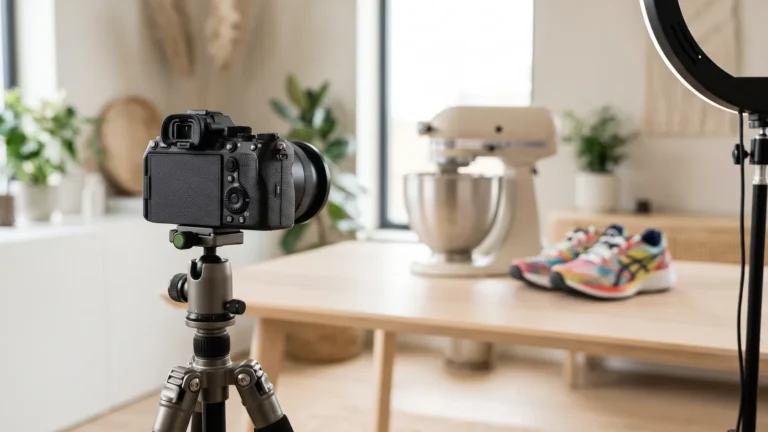
Amazon onsite commissions are payouts for sales that happen when Amazon shows your influencer video or photo on its own site — on product pages, in search or on the homepage — and a shopper buys after watching.

Why onsite commissions matter to affiliate creators
Standard affiliate income runs on one bargain: you send the shopper, Amazon pays a cut of what they buy. Onsite income rewrites that bargain. Amazon supplies the shopper, and your clip only has to be sitting in the right place when that shopper arrives.
Amazon’s official explainer on joining the Influencer Program confirms that creator-uploaded storefront photos and videos can be surfaced by Amazon on product detail pages, in search results and on the homepage — the surfaces where onsite commissions are generated. Those are the highest-intent screens on the entire site. Someone reading the bullet points on an air purifier page is already most of the way to checkout.
For a blogger, this removes the ceiling that search rankings put on your earnings. You can be invisible on Google and still get paid, as long as your clips attach to busy ASINs. It also changes the production math: a 45-second counter-top demo can out-earn a 2,000-word review, because it sits one scroll away from the Buy box.
The trade-off is control. You do not pick the placement, the duration or the audience. Before you film anything, it helps to know exactly which track you are enrolled in — the split between the Associates and Influencer programs decides what you can earn at all.

How onsite commissions work: Amazon’s traffic, your content
Three stages, nothing more complicated than this:
- You upload. Shoppable photos and videos go into your Influencer storefront, each tagged to specific ASINs you have actually handled.
- Amazon places. Amazon’s systems decide which clips appear on which detail pages, search modules or homepage slots.
- A shopper buys. When someone engages with that content and then purchases the linked item, Amazon credits it against the onsite rate card.
Notice what is absent from the chain. No tracking link, no cookie you set, no click out of your blog. Attribution happens inside Amazon’s own session data, which is why onsite earnings appear in their own reporting area instead of mixing into link-based sales.
Your real influence sits in three choices: which products you cover, how quickly the clip shows the thing working, and how many ASINs you cover in total. Coverage behaves like a portfolio. One viral clip is luck; four hundred tagged clips across stable, repeat-purchase categories is a system.
Getting there starts with approval and a stocked storefront, and the full walkthrough for getting accepted into the Influencer Program covers the application itself.
What counts as a Direct Qualifying Purchase (and what doesn’t)
Amazon’s Onsite Associates Program Commission Income Statement on Associates Central defines onsite commission income as payment for qualifying purchases that is limited to "Direct Qualifying Purchases" only. That bucket is narrower than the one used for ordinary affiliate links.
Two restrictions do most of the work:
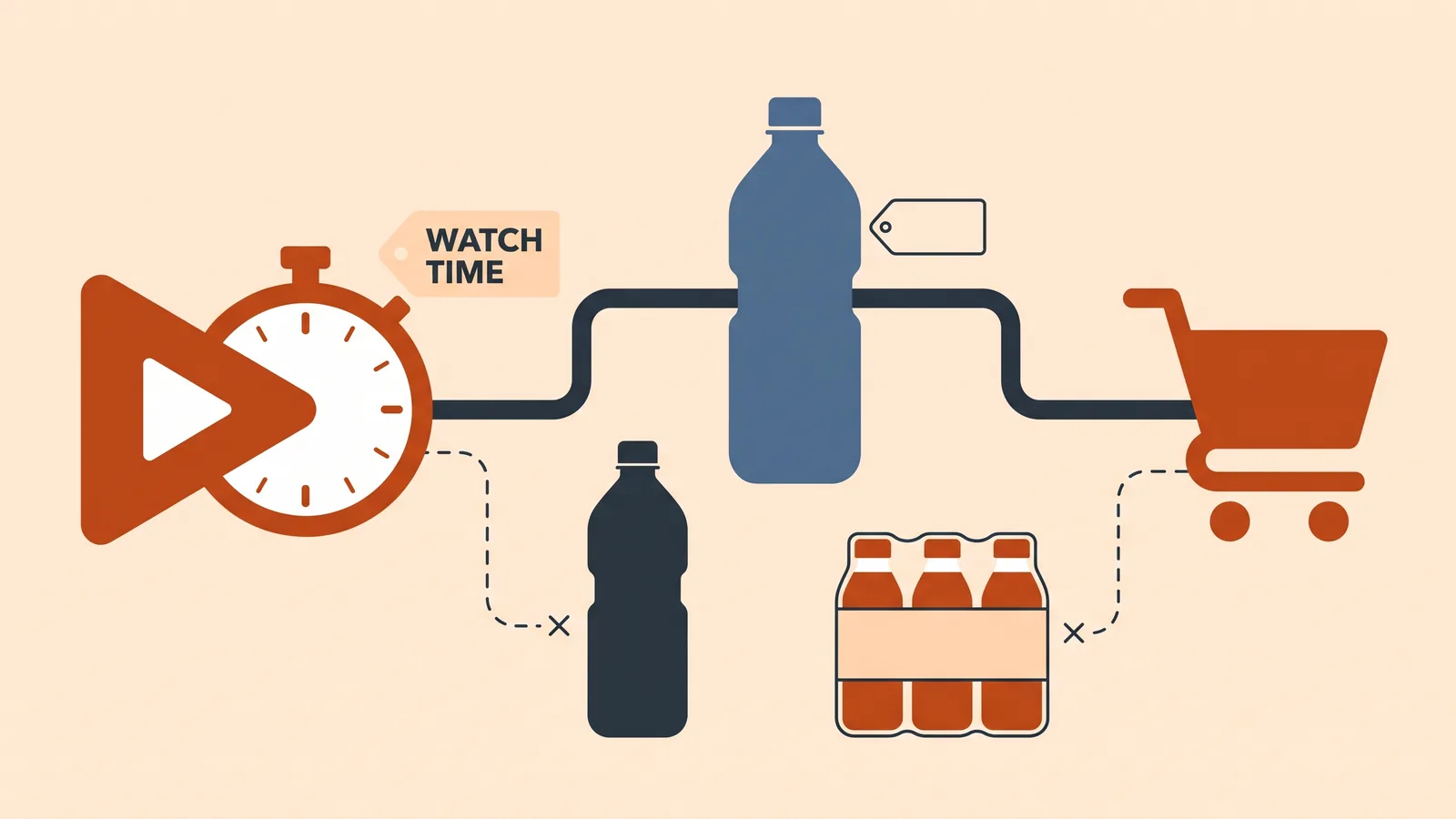
- Minimum watch time. According to Amazon Associates Central, a sale from shoppable video placed on a product detail page only counts as a Direct Qualifying Purchase after the shopper has watched a minimum period of the video, as determined by Amazon.
- Exact variant only. Amazon dated its most recent set of Associates Program Operating Agreement and Program Policies changes effective April 14, 2026, and that update narrowed onsite scope so income is calculated only on purchases of the same ASIN variant as the linked product detail page.
Read the second rule twice, because it reshapes product selection. A viewer who watches your clip on the 32-ounce blue bottle and then buys the 24-ounce black one falls outside that calculation. Colors, sizes and multipacks are separate variants.
The word "Direct" is doing real work here as well. Onsite income attaches to the linked product, not to whatever else lands in the same basket. Purchases you make yourself are a separate question entirely, and the rules on earning affiliate fees on your own orders apply to onsite content too.
Real examples: Creator Connections, Creator Ads and Prime Day boosts
Creator Connections is Amazon’s own brand-to-creator marketplace; Amazon’s official Influencer Program explainer describes it as a marketplace that connects creators with brands sold on Amazon. The way the program works, creators can stack brand-funded bonus commissions on top of standard and onsite rates: brands post offers, you accept the ones that match your catalog, and the bonus rides along with the normal payout. That is additive income on content you were already making.
Creator Ads is the second real mechanism, and the paid placement pays more than organic placement. Amazon Associates Central lists a fixed onsite rate of 2.00% for "All Other Categories" under Table B when onsite content is served as Creator Ads, checked November 2026.
Seasonal boosts are the third. Adweek reported that for Prime Day 2025, Amazon raised creator commissions by up to double from July 1 through July 20, communicated through Amazon Associates.
A hypothetical to show the shape of that: imagine a creator who films kitchen gear and sees her onsite earnings pick up during an event window like that one, not because she published more, but because her existing clips sat on deal pages that Amazon was already promoting hard. The lesson from that pattern is scheduling — have the inventory of clips live and indexed before the event, not during it.
Onsite commissions vs. offsite affiliate links
Both income types can land in the same Associates account, and they behave nothing alike. The simplest way to tell them apart is to ask who paid for the shopper’s attention.
| Onsite commissions | Offsite affiliate links | |
|---|---|---|
| Who brings the traffic | Amazon, from its own pages | You, from a blog, newsletter or social post |
| What you publish | Shoppable photos and video tied to ASINs | Tracking links in your own content |
| Credit basis | Direct Qualifying Purchases, per Amazon Associates Central | Clicks on your tag within Amazon’s cookie window |
| Scope of the sale | Same ASIN variant as the linked detail page | Broader basket rules on Amazon’s standard tables |
| Control over placement | None — Amazon decides | Total — you choose format and audience |
| Main growth lever | Volume of tagged clips | Volume and intent of your own traffic |
Offsite is still where strategy lives, because you own the audience and can move it anywhere. Onsite is where scale lives, because Amazon’s traffic dwarfs yours. Creators who post product video off-platform should also check the policy side of that distribution, including what Amazon allows for affiliate links on TikTok.
Common misconceptions about Amazon onsite commissions
"Onsite income replaces my blog." It supplements it. Placement is Amazon’s decision, and a category can go quiet without warning, so a single-source income plan is fragile.
"Every sale after a view gets paid." Amazon Associates Central is explicit that credit requires a Direct Qualifying Purchase, and a short view that never reaches the minimum watch period does not meet the bar.
"Any color of the product counts." The April 2026 agreement update tied onsite income to the same ASIN variant as the linked detail page, which means variant choice at upload time is an earnings decision, not an admin detail.
"The rate is the same everywhere." Onsite tables are published per marketplace, and a category that pays modestly on Amazon.com can pay far more on another storefront.
"Production value drives the payout." Clarity drives it. A steady close-up showing the hinge, the texture or the fit answers the question the shopper actually has, and shoppers who get their answer tend to keep watching.
Eligibility, rates, attribution and payouts
Eligibility starts with acceptance into the Amazon Influencer Program and a storefront with real tagged content. Per Amazon’s official explainer, onsite placement draws on the photos and videos creators upload to their storefront, so that uploaded library is what Amazon has to surface in the first place.
Rates are fixed per marketplace rather than negotiated. On Amazon.com, Amazon Associates Central lists a fixed onsite commission rate of 1.00% of qualifying revenue for "All Other Categories" outside Creator Ads, checked November 2026. Compare that to another country: Amazon.ca’s onsite table pays 5.00% on categories including Apparel, Jewelry, Luggage, Luxury Beauty, Shoes and Beauty, checked November 2026.
Attribution is handled entirely by Amazon. You will not see a click report the way you do with tracking links, so judge performance by which ASINs and categories produce revenue over a full month rather than by any single clip.
Payouts flow through the same Associates payment process as link income, reported as a separate line. Building the catalog that feeds all of this is a storefront job first, and the guide to setting up an Amazon storefront as an influencer walks through the structure.
Bottom line: where onsite commissions fit in your income mix
Treat onsite commissions as compounding inventory rather than a campaign. Each clip you upload keeps a chance of being placed for months, which makes consistency worth more than any single launch week. Ten uploads a week in categories you genuinely use will beat one perfect production.
Keep the rate math honest when you plan. Low fixed percentages on Amazon.com mean volume and order value carry the result, so bulky, repeat-purchase and higher-ticket items repay the filming time faster than cheap impulse goods.
Pair it with something you control. Your blog, email list and off-platform video still decide whether you have a business when Amazon changes a table — and Amazon has changed its agreement terms as recently as this year.
One honest summary: onsite income is the easiest money to start and the hardest money to defend. Build both halves.
This article is general information about Amazon’s published program terms for Associates and Influencer Program members, not legal or financial advice.
Frequently asked questions
Do I need the Amazon Influencer Program to earn onsite commissions?
In practice, yes. Amazon’s official explainer says creator-uploaded storefront photos and videos can be surfaced on product detail pages, in search results and on the homepage, which is what generates onsite commissions — so onsite earnings depend on having an accepted Influencer Program account with uploaded, ASIN-tagged content. Standard Associates link income works separately and does not require it.
What rate do Creator Ads pay compared with organic onsite placement?
Creator Ads pay more. Amazon Associates Central lists 2.00% for "All Other Categories" under Table B when onsite content is served as Creator Ads, checked November 2026, versus the lower fixed rate for ordinary onsite placement on Amazon.com, which Associates Central lists as 1.00% of qualifying revenue for "All Other Categories," also checked November 2026.
Why did a sale on my product page not get credited?
Two common reasons. Amazon Associates Central states that shoppable video on a detail page only counts after the shopper watches a minimum period set by Amazon, and credit applies to the same ASIN variant as the linked page, so a size or color swap falls outside it.
Are onsite commission rates the same in every Amazon marketplace?
No, they are published per marketplace. Amazon.ca’s onsite table pays 5.00% on categories including Apparel, Jewelry, Luggage, Luxury Beauty, Shoes and Beauty, checked November 2026, which is well above the Amazon.com general onsite rate for most categories.
How do onsite commissions get paid out?
They flow through the same Amazon Associates payment process as link-based earnings, reported on their own line rather than merged with tracking-link sales. Check the onsite reporting area in your account to see which ASINs and categories produced the revenue each month.
Sources
- Onsite Commission Income / Direct Qualifying Purchases — Amazon Associates Central
- Onsite Associates Program Commission Income Statement — Amazon.ca Associates Central
- Updates to the Associates Program Operating Agreement — Amazon.com Associates Central
- How to join the Amazon Influencer Program and earn money — About Amazon
- Amazon Is Doubling Commissions for Influencers During Prime Day — Adweek
Written with AI assistance and fact-checked against the sources cited above before the Amazon Affiliate Editorial Team published it.