Wondering how many followers for amazon influencer program approval? Amazon publishes no minimum — it weighs content quality, engagement and follower count together. Advertise Purple reports successful applicants typically have between 1,000 and 5,000 followers.

Why the follower question matters for affiliate creators
Definition: The Amazon Influencer Program is the creator branch of Amazon Associates. Approved creators get a shoppable Amazon storefront and earn commissions when shoppers buy the products they show in videos, photos and lists.
You ask about followers because it is the one number you can see. Amazon sends no scorecard after a decision, so creators reverse-engineer a cutoff from screenshots of other people’s approvals and rejections. That guesswork burns weeks, and it usually ends with the wrong conclusion: that there is a single threshold waiting to be discovered.
The stakes go beyond a badge. An approved storefront opens shoppable video placements on Amazon product pages, a different earnings path from text links on a blog — how onsite commissions actually pay creators walks through the mechanics.
Scale matters too. According to Amazon’s 2025 program explainer on About Amazon, the Amazon Influencer Program is available in more than 20 countries, which means one unpublished standard is being applied across many markets and languages.
What Amazon actually requires: qualitative and quantitative thresholds explained
Amazon’s wording is deliberately open. The Associates Program Policies on Amazon Associates Central say an eligible Associate must meet Amazon’s qualitative and quantitative thresholds and complete registration, and they publish no follower number for the Influencer Program. "Quantitative" points at audience size and posting volume; "qualitative" points at what your posts actually look like.
What the application form and Amazon’s own descriptions ask of you:
- A qualifying account. Amazon accepts applications only from a TikTok, Instagram, YouTube, Pinterest or Facebook account, per Amazon’s program explainer on About Amazon.
- A real posting history. Three posts published the week you apply read as thin, whatever the follower number next to them.
- Audience interaction. Comments, saves and views that scale sensibly with your follower count.
- Shoppable subject matter. Things you can hold, wear, assemble or demonstrate on camera.
- Public settings. A private profile cannot be reviewed at all.
Unofficial numbers do exist. Advertise Purple reports that successful applicants typically have between 1,000 and 5,000 followers on Instagram, TikTok, Facebook or YouTube, while stressing that Amazon publishes no official minimum. Read that as a band one agency observed among its clients, not a rule you can hold Amazon to.
How Amazon’s review reads your account: engagement, content quality and platform signals
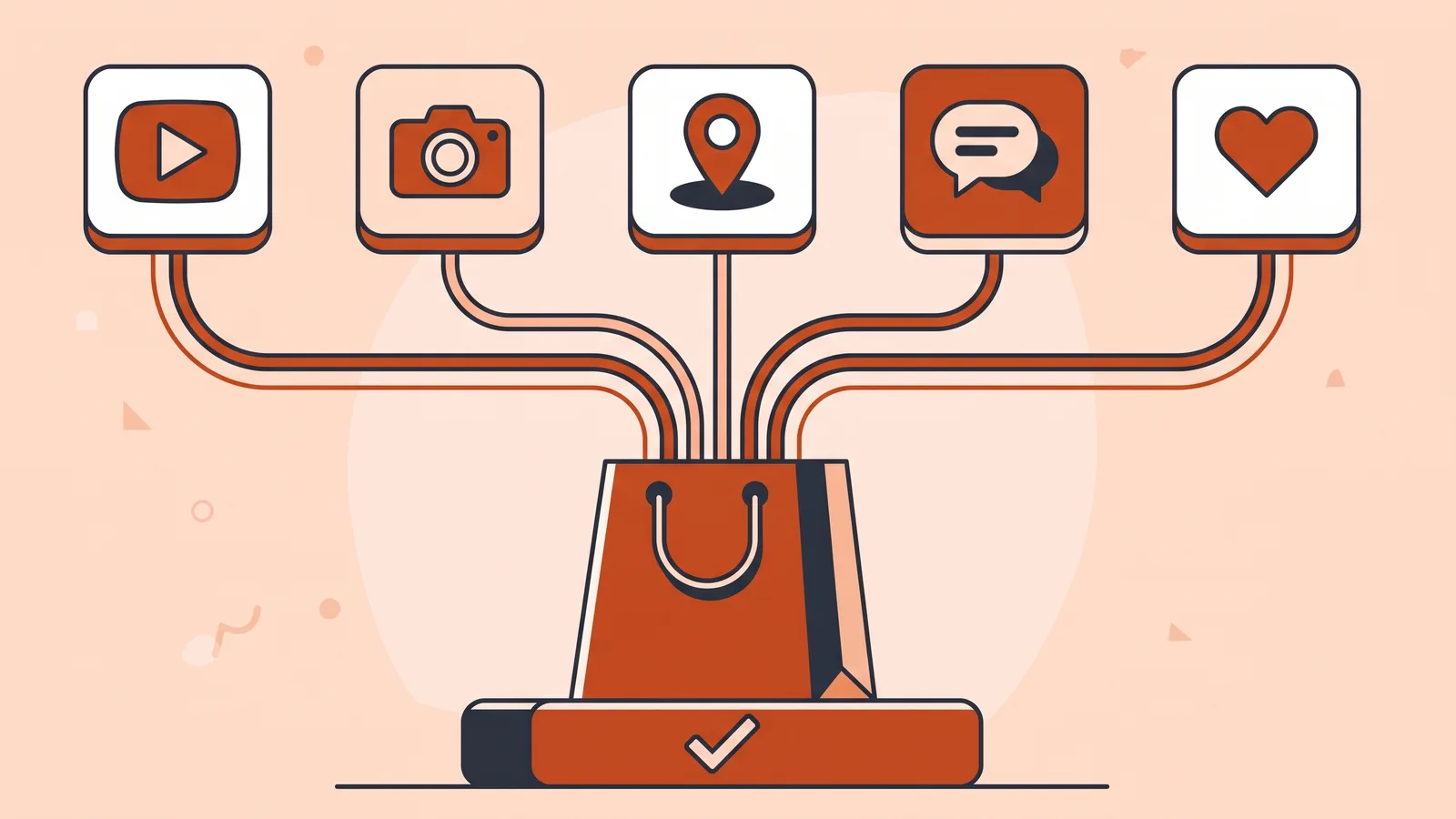
Amazon states that influencer applications are judged on several factors — content quality, engagement rate and follower count — rather than on a single follower cutoff, according to its program explainer on About Amazon. Three signals, weighed together, with no published formula behind them.
Engagement is where a small account can outrank a big one. Advertise Purple, an agency that tracks client approvals, reports these unofficial engagement-rate patterns among accepted accounts:
| Platform | Engagement rate among accepted accounts |
|---|---|
| 1–3% | |
| TikTok | 4–18% |
| YouTube | 7–10% |
| 1–5% |
Source: Advertise Purple, which notes these figures are unofficial and not published by Amazon.
Content quality is judged on what a reviewer sees in the first few seconds of your recent posts. Clear lighting, a product that fills the frame, a voice or caption explaining why it is worth buying.
Platform signals round it out. A YouTube channel with twelve honest tool demos reads stronger than an Instagram grid of reposted memes, even if the meme account has the bigger audience. Consistency inside one shoppable category helps a reviewer place you quickly.
Real examples: follower counts of approved creators
Public, documented cases are rarer than forum anecdotes, so start with the agencies and publishers that record them by name.
Advertise Purple documents a creator who was accepted into the program with only 77 followers and who has had multiple four-figure earning months with 1,000 followers or fewer. That single case does more damage to the hidden-cutoff myth than any opinion post.
Influencer Marketing Hub, a named industry publisher, dates the program’s creation to 2017 and describes it as aimed at individuals with a significant social media following. The consultancy Neal Schaffer reports the same 2017 launch, as a creator-focused branch of Amazon Associates first reported by TechCrunch. Two independent publishers, one origin story: a program built for social audiences rather than for websites.
Example: a hypothetical cast-iron cooking account with roughly 900 TikTok followers, posting two seasoning and cleanup demos a week, with comment threads full of "which brand is that?" questions. On the signals above — shoppable products, steady cadence, lively comments — that account is a far more plausible applicant than a much larger meme page with no product content.

Amazon Influencer Program vs Amazon Associates
These are two doors into the same affiliate system, and people confuse them constantly.
| Amazon Influencer Program | Amazon Associates | |
|---|---|---|
| Built for | Social creators with an audience | Site, blog and app owners |
| Apply with | A qualifying TikTok, Instagram, YouTube, Pinterest or Facebook account | A website, blog, app or channel you own |
| Origin | Launched 2017 as a creator branch of Associates (Neal Schaffer) | The older, broader affiliate program |
| Storefront | Free vanity URL in the form amazon.com/shop/influencerhandle (Amazon FAQ) | No storefront |
| Where you promote | Spoken or linked on social, plus on-Amazon placements | Links inside your own content |
| Stated eligibility | Qualitative and quantitative thresholds, no published number | Standard Associates application and sales requirements |
The storefront is the practical difference. Amazon’s program FAQ says approved influencers receive a free vanity storefront URL in the form amazon.com/shop/influencerhandle, which you can say out loud in a video instead of asking viewers to hunt for a link in bio.
If you are still deciding which door to knock on, the full side-by-side of the affiliate and influencer tracks covers commission handling and link placement in more depth.
Common misconceptions about follower minimums
"You need 10,000 followers." No Amazon page says that. Amazon’s shopper-facing program page defines an influencer simply as anyone with a meaningful social media following, with no numeric minimum stated.
"Combined followers across platforms count." Amazon’s application is tied to one qualifying account, so there is no documented mechanism for combining platforms. Adding up four audiences to reach an imaginary threshold does not help you.
"A rejection is permanent." It is not. Rejections usually reflect thin or non-shoppable content at the moment of review, and that is something you can change before you reapply.
"Buying followers gets you in faster." Purchased followers wreck the engagement ratio that reviewers look at, which is the signal most likely to carry a small account.
"The storefront is the hard part." Setting up the storefront comes after approval, and in our editorial view the application is the real gate.
One more myth worth killing: that the platform you post on is interchangeable. It is not, because only five platforms are accepted, and your content has to be visible publicly on the one you submit.
Applying: where to start and where to go deeper
The short version of the process: pick your strongest qualifying account, make it public, publish several recent product-focused videos in one category, then submit the application and let Amazon review the account as it stands. Step-by-step screens, what the approval walkthrough covers and what to do after a rejection are laid out in the full approval walkthrough for the Influencer Program.
Spend your prep time on content, not on chasing a number. Ten clear demo videos of products you own will move a reviewer more than a crowd of followers who never comment.
After approval, your storefront becomes the hub you point every video and bio at. How to build and organize that storefront covers idea lists, categories and the vanity handle you will be saying out loud for years.
Keep a calendar note for reapplication. If you are declined, give yourself a clear block of posting — new product videos, real comments, consistent niche — before you try again, so the second review sees a different account.
Bottom line
There is no follower minimum to quote, because Amazon never published one. The company’s own policy language stops at qualitative and quantitative thresholds, and its program explainer names content quality, engagement rate and follower count as the factors behind a decision.
The practical read: a few thousand engaged followers in a shoppable niche puts you in the range agencies report seeing among approvals, and documented cases show that far smaller accounts have been accepted too.
So stop refreshing your follower count. Publish product videos that a stranger could watch and immediately know what to buy, keep the account public and active, and apply with the platform where your audience actually talks back.
Frequently asked questions
Is there an official follower minimum for the Amazon Influencer Program?
No. Amazon’s shopper-facing program page defines an influencer as anyone with a meaningful social media following and states no numeric minimum, which is why agency-reported ranges, not Amazon pages, are the source of the numbers commonly quoted online.
What engagement rate do approved influencer accounts usually have?
Advertise Purple reports unofficial engagement-rate patterns among accepted accounts: Instagram 1–3%, TikTok 4–18%, YouTube 7–10% and Facebook 1–5%. Those are agency observations of client approvals, not thresholds Amazon has published or confirmed anywhere.
What does Amazon look at if not just follower count?
Amazon says influencer applications are judged on several factors — content quality, engagement rate and follower count — rather than a single cutoff. In practice that means recent, public, product-focused posts in one category, with comments and views that match your audience size.
Can I join the Amazon Influencer Program outside the United States?
Yes, in many markets. According to Amazon’s 2025 program explainer on About Amazon, the program is available in more than 20 countries, though you still apply with a qualifying social account and are reviewed against the same unpublished standard.
Do I get a storefront link, and do I need one before applying?
You do not need one first. Amazon’s program FAQ says approved influencers receive a free vanity storefront URL in the form amazon.com/shop/influencerhandle, which you set up after acceptance and can say out loud in videos instead of linking.
Sources
- Associates Program Policies — Amazon.com Associates Central
- What is the Amazon Influencer Program? Your questions answered. — About Amazon
- Amazon Influencer and Associate Programs — Amazon.com
- Amazon Influencer Program — Frequently asked questions (Amazon.com)
- How Many Followers for Amazon Influencer Program? — Advertise Purple
- Amazon Influencer Marketing: Everything you Need to Know To Succeed — Influencer Marketing Hub
- How Does the Amazon Influencer Program Work? Your Ultimate Guide — Neal Schaffer
Written with AI assistance and fact-checked against the sources cited above before the Amazon Affiliate Editorial Team published it.